
How Do Affiliate Links Work? A Complete Creator Guide (2026)
Affiliate links are the easiest way for creators to earn income online — once you understand the mechanics. Here's the complete 2026 guide to how affiliate links actually work, with examples, tracking explained and real income benchmarks.
Affiliate links are the quiet workhorse of the creator economy. They don't need a million followers, a brand contract, or a product warehouse — just a recommendation and a tracked URL. That's why every category of creator, from TikTok product reviewers to niche newsletter writers, eventually adds affiliate income to their monetization mix.
This guide is the long version. By the end you'll know exactly what an affiliate link is, how the click-to-commission loop actually runs under the hood, where to place links so they earn for years, and how to build an affiliate hub that compounds. If you want a shorter primer first, see What Is an Affiliate Link?. For the full skill path, the affiliate marketing learning path walks you through every step with exercises.
What Is an Affiliate Link?
An affiliate link is a normal product or website URL with a tracking ID attached. That ID tells the merchant *who* sent the visitor. If the visitor buys, the merchant pays that referrer — you — a commission.
Three things make a link an "affiliate link":
- Destination — the merchant's product, signup or landing page.
- Tracking ID — a unique parameter (often
?aff=jamieor?ref=12345) that identifies you. - Attribution rules — the cookie window and last-click rules that decide who gets paid if multiple referrers send the same visitor.
That's the whole concept. Everything else — affiliate networks, dashboards, payout cycles — is plumbing built around that one tracked URL. For the wider discipline of promoting products this way, see affiliate marketing.
**Plain-English definition**: an affiliate link is a tracked recommendation. You send the traffic, the merchant tracks the sale, and you get a cut.
How Do Affiliate Links Actually Work?
Here's the full step-by-step loop. Every affiliate program — Amazon Associates, ShareASale, Impact, a SaaS in-house program — follows this exact pattern.
1. Creator joins an affiliate program. You apply to a brand directly or sign up through an affiliate network that hosts hundreds of programs. Approval is usually instant for networks, manual for premium brands.
2. Creator receives a unique affiliate link. The dashboard generates a URL that contains your tracking ID. You can also add a sub-id (e.g. sub_id=youtube-review) to label *where* the click came from.
3. Audience clicks the link. A viewer reads your post, watches your video or opens your newsletter and taps the recommendation.
4. A tracking cookie is placed. The merchant or network drops a small file in the visitor's browser. It stores your affiliate ID and an expiry date — the cookie window — that can range from 24 hours (Amazon) to 90 days or lifetime (premium SaaS).
5. The user purchases. The buyer completes checkout. The merchant's system reads the cookie, sees your affiliate ID, and tags the sale as referred by you.
6. The commission is recorded. The sale goes "pending" while the refund window passes (usually 30–60 days). Once cleared, it moves to "approved".
7. The creator gets paid. On the next payout cycle (most networks pay monthly once you hit a minimum threshold), the approved balance lands in your bank account, PayPal or wire.
That's the entire mechanism. Everything that goes wrong with affiliate income — disappearing commissions, low earnings, refunds — happens at one of these seven steps.
Affiliate Link Example
Let's walk through a real flow, end to end. Imagine a TikTok creator who reviews creator tools.
``
TikTok creator posts a "3 tools I use" video
        ↓
Pins comment: "All tools in my bio"
        ↓
Viewer taps the bio link → opens the creator's Vyntree profile
        ↓
Vyntree hub shows a "Tools I use" section with affiliate recommendations
        ↓
Viewer taps "Try ConvertKit free" (affiliate link)
        ↓
ConvertKit drops a 90-day tracking cookie
        ↓
Viewer signs up for a paid plan 11 days later
        ↓
ConvertKit attributes the sale to the creator (last-click within window)
        ↓
30% recurring commission recorded on the creator's dashboard
        ↓
Commission cleared after refund window → paid via PayPal next cycle
``
Notice how the bio link is the bridge — a single tap turns short-form video traffic into a real, trackable click. That's why every serious affiliate creator runs a proper creator website or hub instead of dumping links in captions.
How Creators Make Money From Affiliate Links
Not all commissions are paid the same way. The four most common structures:
- One-time commission — a single payment when the referred user buys. Most e-commerce affiliate programs (Amazon, fashion brands) work this way.
- Recurring commission — a percentage of every billing cycle for as long as the customer pays. Common in SaaS and subscriptions. See recurring commission for the long-term math.
- Percentage commission — a percentage of the sale value (e.g. 10% of a $200 order = $20). The most common structure across networks.
- Flat-rate commission — a fixed amount per sale or signup regardless of order size (e.g. $50 per paying customer). Common for SaaS trials, financial products and high-ticket courses.
The number you actually care about isn't the headline rate — it's EPC (earnings per click), which combines commission size *and* conversion rate. A 50% commission on a product nobody buys earns less than a 5% commission on something your audience already wants. For a deeper breakdown of how commissions are structured and approved, see affiliate commission.
Best Places To Put Affiliate Links
Placement is half the game. The same link can earn $0 or $5,000 depending on where it sits.
- Link in bio — one pinned offer at the top of your bio link hub beats a wall of 20 random links. Highest intent on Instagram and TikTok.
- Creator website — your own creator website gives you full control over layout, SEO, and tracking. Long-term compounding asset.
- YouTube description — the highest-converting link goes *first*. Use a short branded redirect (e.g.
creator.com/go/tool) so it looks clean. - Newsletter — a dedicated "tool of the week" slot converts far better than scattered links throughout the body.
- Blog — evergreen "best of" and "how to" posts that rank in search are the closest thing to passive affiliate income that exists.
- Resource pages — a single, well-organised page listing every tool you recommend by category.
- Tools I Use page — the highest-EPC page most creators ever build. One link per category, with context on *why* you use it.
**CTA — Build your affiliate hub with Vyntree.** A Vyntree profile gives you a single page to organise every affiliate link, group them into sections, track every click, and update prices without redeploying a website. [Start free](/signup).
Affiliate Links vs Brand Deals
Affiliate links and brand deals are the two main pillars of creator monetization. They're not competitors — they work best together — but they behave very differently.
| Dimension | Affiliate Links | Brand Deals |
|---|---|---|
| Upfront payment | None — earnings come after sales | Flat fee paid upfront or on delivery |
| Income type | Performance-based, variable | Fixed, predictable |
| Scalability | Highly scalable — one link, infinite clicks | Caps at how many deals you can deliver |
| Passive income potential | High — evergreen content keeps earning | Low — earnings end when the campaign ends |
| Audience size required | None — works at any size | Usually 5K–10K minimum for paid deals |
| Effort per dollar (early on) | Higher — depends on conversion | Lower — fixed paycheck |
| Best for | Compounding long-term revenue | Predictable monthly income |
Dimension
Upfront payment
Affiliate Links
None — earnings come after sales
Brand Deals
Flat fee paid upfront or on delivery
Dimension
Income type
Affiliate Links
Performance-based, variable
Brand Deals
Fixed, predictable
Dimension
Scalability
Affiliate Links
Highly scalable — one link, infinite clicks
Brand Deals
Caps at how many deals you can deliver
Dimension
Passive income potential
Affiliate Links
High — evergreen content keeps earning
Brand Deals
Low — earnings end when the campaign ends
Dimension
Audience size required
Affiliate Links
None — works at any size
Brand Deals
Usually 5K–10K minimum for paid deals
Dimension
Effort per dollar (early on)
Affiliate Links
Higher — depends on conversion
Brand Deals
Lower — fixed paycheck
Dimension
Best for
Affiliate Links
Compounding long-term revenue
Brand Deals
Predictable monthly income
The smart move is to stack both: affiliate income builds a baseline that earns 24/7, brand deals add bigger paydays on top. For the full revenue comparison across creator tiers, see the Creator Monetization Report 2026.
Affiliate Link Tracking Explained
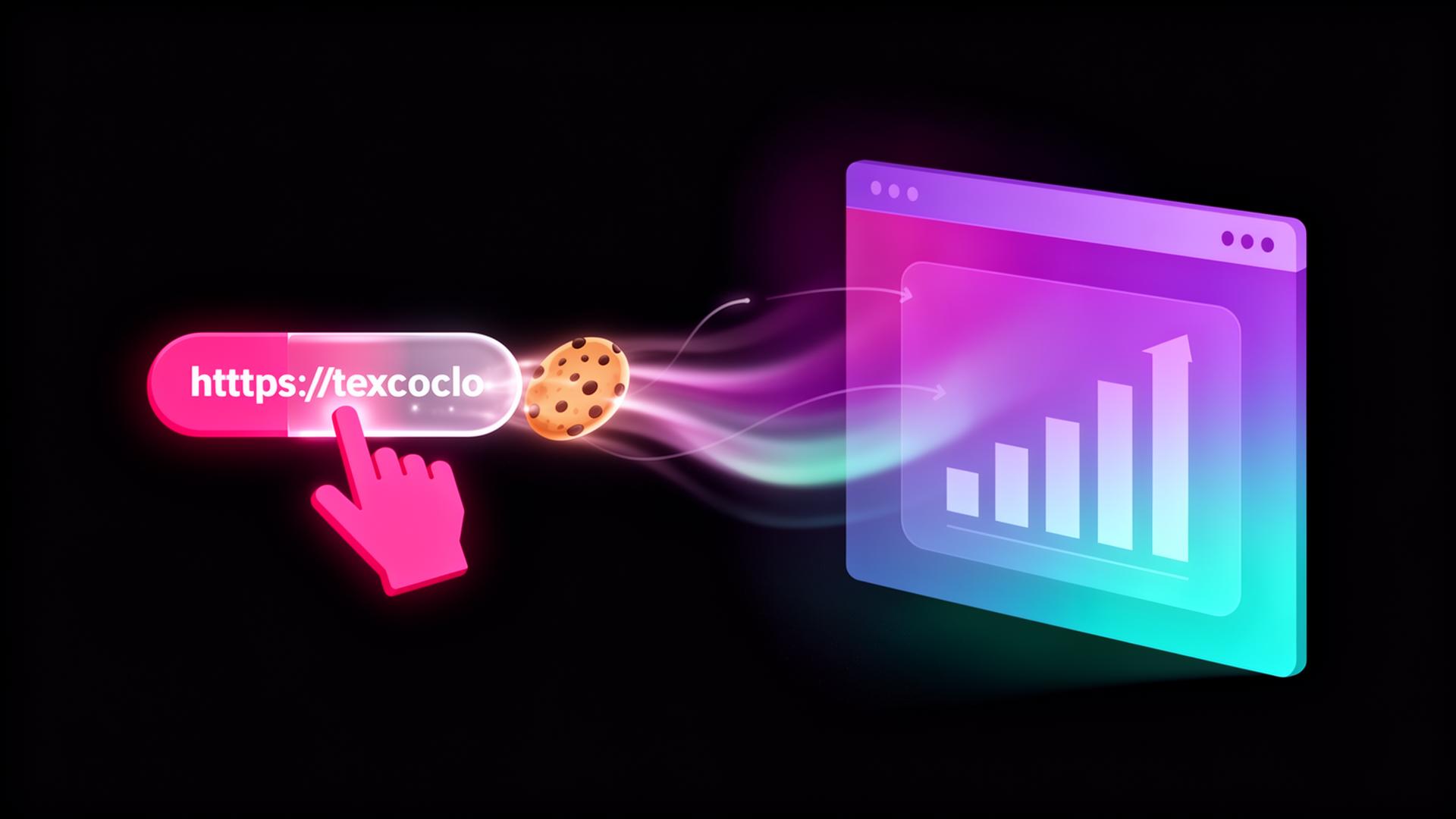
Tracking is the part most creators misunderstand — and where most commissions silently disappear. Three concepts to know:
Cookies. When a visitor clicks your link, the merchant stores a small file in their browser with your affiliate ID and an expiry date. If they come back and convert before that date, the sale is attributed to you. Cookie windows vary wildly: 24 hours (Amazon), 30 days (most retail), 60–90 days (most SaaS), lifetime (premium programs).
Attribution. Attribution is the rule that decides who gets paid when multiple referrers send the same visitor. Almost every affiliate program uses last-click attribution: the most recent affiliate link clicked before purchase wins the commission. This is why pinning your link near the buy decision matters more than getting the first click.
Last-click attribution. If a viewer clicks your YouTube link, then later sees a coupon site, clicks their affiliate link, and *then* buys — the coupon site wins. That's last-click. There's nothing you can do about it except sending traffic that converts quickly.
Referral tracking. The sub-id parameter (e.g. sub_id=youtube-review-jan) lets you tag *where* each click came from. Without sub-ids you'll never know which video, post, or page is actually driving sales. With them you can double down on what works.
Analytics. Network dashboards show clicks, EPC, and conversion rate. Layer your own analytics (Vyntree, a redirect tool, or your blog) to track the half the funnel that lives on *your* side: which pages drive clicks. Combine that with the traffic source data to know exactly which channel earns the most per visitor.
Modern programs have largely moved to first-party + server-side tracking (postbacks, S2S) to survive Safari/Firefox cookie restrictions. If a program still relies purely on third-party cookies in 2026, your real EPC will run 20–40% lower than the dashboard suggests.
Common Affiliate Marketing Mistakes
The mistakes that kill affiliate income are almost always the same five or six:
- Promoting random products. Recommending anything with a commission destroys audience trust faster than anything else. Promote only what you actually use.
- No audience trust. Affiliate links don't replace credibility — they multiply it. Zero trust × any link = zero income.
- No disclosure. The FTC (US), ASA (UK) and equivalent EU regulators all require clear, conspicuous disclosure. Use *#ad* or "affiliate link" in the same language your audience uses. Hidden disclosures get accounts banned.
- No tracking. Without sub-ids you're guessing which content drives sales. Without analytics on your side, you can't optimise placement.
- Too many links. Twenty options on one page = decision paralysis = zero clicks. One pinned offer above the fold beats a wall of links every time.
- Wrong placement. A link buried in the third paragraph of a 2,000-word post earns nothing. Place links where the audience is *deciding what to buy*, not where they're still learning.
How To Build an Affiliate Hub
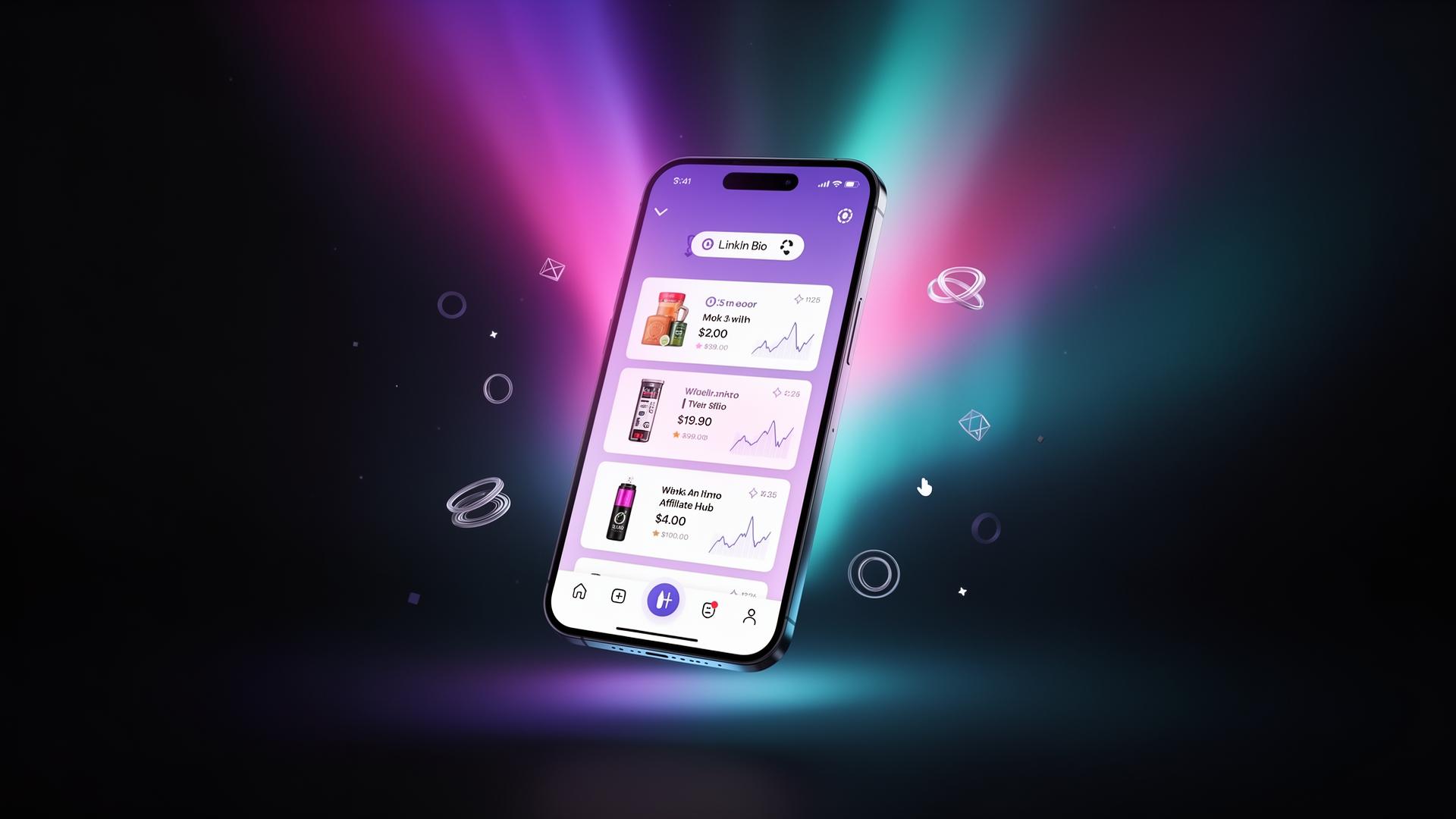
A "hub" is a single page that organises every affiliate recommendation you make. It's the difference between scattered links across 200 captions and one compounding asset.
Why creators build hubs:
- Recommendation page — a clean, branded landing page for every "what do you use?" question you get.
- Tools page — categorised affiliate offers (cameras, software, courses, services).
- Creator hub — a fully owned link-in-bio that doubles as a portfolio, contact page and affiliate engine.
A good hub does four things at once:
1. Organises affiliate links by category. 2. Tracks every click so you know which placements convert. 3. Collects leads (newsletter signups, free downloads) so you build an audience you own. 4. Looks like *you*, not like every other Linktree page.
Vyntree was built for exactly this — a single page to organise affiliate links, track clicks, collect leads, and present everything as a proper creator hub. It's not a website builder; it's a focused tool for the link-in-bio + affiliate hub combo. If you want to see how it fits affiliate workflows specifically, Vyntree for affiliate marketers walks through the use case.
Affiliate Income Benchmarks
Real numbers matter more than promises. Based on data from our Affiliate Income Benchmarks 2026 report, here's roughly what creators earn at each stage.
- Beginner (0–6 months, under 5K audience) — $0 to $300/month. Most months are single digits. The goal isn't income yet, it's testing which products convert.
- Intermediate (6–18 months, 5K–50K audience) — $300 to $3,000/month. One or two evergreen posts or videos start carrying most of the income. EPC becomes meaningful enough to optimise.
- Advanced (18+ months, 50K+ engaged audience or a niche SEO site) — $3,000 to $30,000+/month. A handful of high-EPC offers, recurring SaaS commissions, and a content library that earns while you sleep. The top of this tier is full-time affiliate income.
Realistic example: a YouTuber with 12K subscribers reviewing creator tools earns around $400/month from affiliate links — mostly from one pinned ConvertKit recurring commission and a handful of Amazon Associates orders. After 18 months and 40+ evergreen videos, that scales to $4,000/month with the same audience size — because the *library* compounds, not the follower count.
For the full breakdown by niche (finance, fashion, tech, fitness, creator economy), open the Affiliate Income Benchmarks 2026 report.
FAQ
Frequently Asked Questions
Conclusion
Affiliate links are one of the easiest monetization methods in the creator economy — and one of the most underrated. You don't need a huge audience. You don't need brand deals. You don't need your own product. You need three things: an audience that trusts you, a small set of products you genuinely use, and a hub that turns recommendations into trackable clicks.
The creators who win with affiliate income aren't the loudest or the biggest. They're the ones who:
- Treat affiliate links as a system, not a side bet.
- Recommend only what they'd recommend without a commission.
- Use tracking, sub-ids and analytics to optimise placement.
- Build evergreen content and an organised hub that compounds.
Do those four things and affiliate income stops being random and starts being a real revenue stream.
**Build Your Affiliate Hub With Vyntree** — organise every affiliate link, track every click, collect leads, and present your recommendations as a proper creator hub.