
What Is an Affiliate Link? How It Works, Examples & Creator Guide
An affiliate link is one of the simplest ways creators can turn recommendations into revenue. Here's how affiliate links work, where to place them, tracking, disclosure and how to build an affiliate hub.
Most creators hear about affiliate links before they fully understand how they work. Someone says *"just add your affiliate link"* — but what does that actually mean?
An affiliate link is one of the simplest ways creators can turn recommendations into revenue. You share a product, tool, app, course, software or service with your audience. If someone clicks your special tracking link and buys, signs up or completes an action, you earn a commission. Simple idea. Huge creator opportunity.
In 2026, affiliate links are no longer just something bloggers use in old-school product reviews. Creators now use affiliate links across TikTok, Instagram, YouTube, newsletters, Discord communities, podcasts, blog posts, creator hubs and link in bio pages. For many creators, affiliate marketing becomes one of the first real monetization systems they build — often alongside their own Vyntree creator hub and the Vyntree partner program.
In this guide, we'll break down exactly what an affiliate link is, how it works, how creators make money from it, where to place affiliate links, and how to use them without losing audience trust.

Quick answer: what is an affiliate link?
An affiliate link is a unique tracking URL that connects a sale, signup or action back to a specific creator, publisher or partner. When someone clicks that link, the affiliate program can track where the visitor came from. If the visitor completes the required action, the creator earns a commission.
That action could be:
- buying a product
- signing up for software
- starting a free trial
- subscribing to a service
- downloading an app
- booking a call
- joining a platform
The exact commission depends on the program. Some pay a fixed amount per signup, others a percentage of the sale, and some pay recurring commissions for subscriptions — a model we've covered in the creator monetization playbook.
How affiliate links work
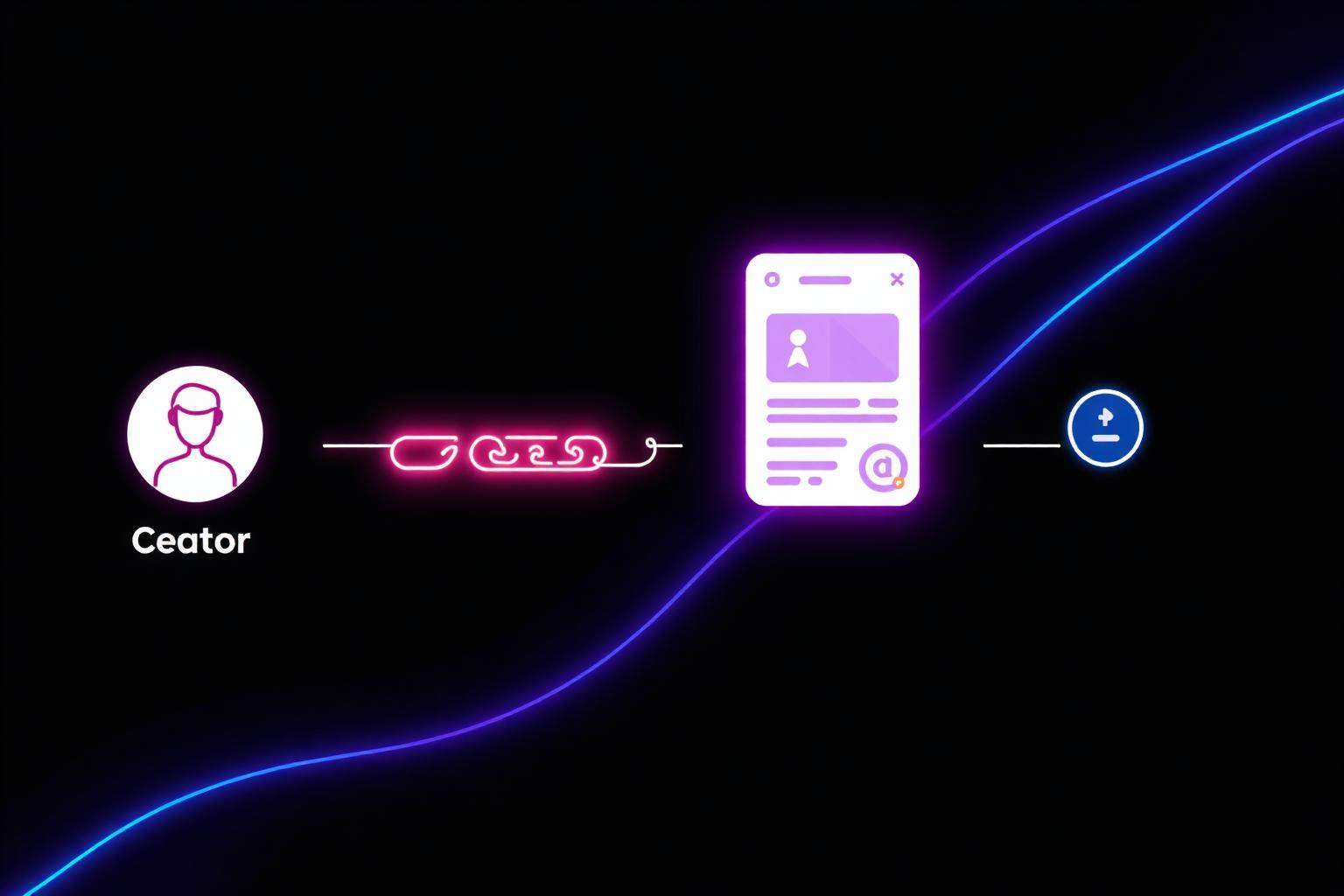
Affiliate links work through tracking. Here is the simple version:
1. Creator joins an affiliate program (for example, Vyntree's affiliate program) 2. Creator receives a unique affiliate link 3. Creator shares the link with their audience 4. Follower clicks the link 5. The affiliate platform tracks the visit 6. Follower buys or signs up 7. Creator earns a commission
The tracking usually happens through unique IDs, cookies, referral parameters, affiliate dashboards and conversion tracking. For example, a normal link might look like example.com/product, while an affiliate link looks like example.com/product?ref=creatorname. That extra tracking part tells the affiliate program which creator sent the visitor.
Why affiliate links are powerful for creators
Affiliate links are powerful because they allow creators to monetize trust. You don't need to launch a product, hold inventory, run a full online store or hire a team. You simply need a relevant audience, useful recommendations, strong content, clear disclosure and a system to organize links.
That makes affiliate marketing one of the easiest monetization methods to start with, especially when the recommendation naturally fits your niche:
- A fitness creator can recommend workout gear
- A tech creator can recommend software
- A beauty creator can recommend skincare
- A gamer can recommend streaming equipment — see the streamer playbook
- A business creator can recommend productivity tools — see Vyntree for business
- A musician can recommend gear and plugins — see Vyntree for musicians
The more relevant the product is to the audience, the better affiliate links usually perform. Browse more creator niches for examples that fit your audience.
Affiliate link vs regular link
A regular link simply sends people to a page. An affiliate link sends people to a page and tracks the referral. That tracking is the key difference.
- Regular link — sends traffic, no commission
- Affiliate link — sends traffic and tracks conversions; commission paid if the action happens
- Sponsored link — usually part of a paid brand deal; payment depends on the agreement
- Referral link — often rewards both the user and the referrer with cash, credit or perks
Affiliate links are especially useful because they turn content into a long-term revenue asset. A YouTube video, blog post, newsletter or creator hub can keep generating clicks and commissions long after it is published. For more terminology, see our creator glossary.
How creators make money with affiliate links
Creators usually make money from affiliate links in a few common ways:
- Percentage-based commissions — earn a percentage of each sale (e.g. a
$100product with a 20% commission pays$20). - Fixed commission per sale — earn a set amount per paying customer (e.g.
$50per paid signup). - Free trial or signup commission — common for software and apps; you get paid when someone starts a free trial or signs up.
- Recurring commissions — get paid every month the referred customer stays subscribed. One referral can compound into long-term revenue.
- Hybrid deals — combine an upfront sponsorship payment with affiliate commission and bonus payouts. Use our rate calculator and affiliate income calculator to model your earnings.
Where creators should place affiliate links
Affiliate links work best when they are easy to find and placed in context:
- Bio pages — your bio page is one of the best places to organize affiliate links because it's where profile traffic goes next. A central hub beats links scattered everywhere.
- YouTube descriptions — viewers often search for reviews, tutorials and comparisons, so descriptions convert well.
- Blog posts — great for evergreen content that ranks on Google and keeps sending traffic for months. Read our SEO for creators guide.
- Newsletters — email audiences chose to hear from you, so conversion tends to be strong.
- Instagram stories — work well when the product matches a timely recommendation.
- TikTok bio — TikTok creators rely heavily on bio pages to route followers to products and tools.
- Communities — Discord, Telegram and private communities can perform well when recommendations are helpful, not spammy.
Want a stronger creator funnel around your links? Read next: [Vyntree vs Linktree — which link-in-bio is right for creators?](/blog/vyntree-vs-linktree-which-link-in-bio)
Why your bio page matters for affiliate links
Many creators make the same mistake — they share affiliate links randomly. One link in a caption, one in a story, one in a video description, one in a comment, one buried somewhere old. That gets messy fast.
A creator bio page solves this by turning scattered links into one organized destination. A strong bio page can help creators group affiliate links by category, highlight top recommendations, promote current offers, track clicks, improve conversions, update links quickly and build a more professional brand. Pair it with Vyntree Pro Analytics and you'll know exactly which affiliate offers convert.
Affiliate links and audience trust
Affiliate marketing only works when people trust the creator. That trust can disappear quickly if affiliate links feel spammy, hidden or dishonest.
Only promote products you genuinely believe are useful for your audience. The best affiliate content usually feels like *"I use this. I recommend this. This helped me. This could help you too."* — not *"buy this because I get paid."*
Strong affiliate creators focus on honesty, relevance, transparency, real experience, useful explanations and clear pros and cons. The goal is not to push random products — the goal is to help your audience make better decisions.
Do creators need to disclose affiliate links?
Yes. Creators should clearly disclose affiliate relationships when they may earn money or receive something of value from a recommendation. Disclosure is not just a legal detail — it is also a trust signal.
A simple affiliate disclosure can look like *"I may earn a commission if you buy through this link"* or *"This post contains affiliate links, which means I may earn a commission at no extra cost to you."* Make it easy to notice and easy to understand — don't hide it on a separate page, bury it where people will miss it, or make it confusing.
Affiliate link SEO: sponsored or nofollow?
If you publish affiliate links on a blog or website, mark them properly for search engines. For paid, sponsored or affiliate-style links, many site owners use:
``html
<a href="https://example.com" rel="sponsored">Recommended tool</a>
``
Some also use rel="nofollow". This helps search engines understand the link is commercial and keeps your affiliate content cleaner and more professional. For broader SEO patterns, see the SEO for creators guide.
Best types of affiliate content for creators
Some content formats work especially well for affiliate links:
- Product reviews — people searching for reviews are often close to buying.
- Tutorials — the product is shown in action.
- Comparison posts — e.g. *Tool A vs Tool B*, *best apps for creators*, *best microphones for streamers*, *best AI tools for YouTubers*.
- Resource pages — collect all your favorite tools in one place. Browse Vyntree templates for layouts.
- "My setup" pages — camera gear, editing tools, software stack, lighting, desk setup, daily apps.
- Case studies — show how a tool helped you achieve a real result.
- Newsletters — personal recommendations often drive the strongest affiliate clicks.
Want to understand how creators build revenue systems? Read [How creators turn followers into revenue in 2026](/blog/monetize-audience-without-big-following).
Common affiliate link mistakes creators make
- Promoting too many products — if every post is a promotion, people stop listening.
- Recommending irrelevant products — a gaming creator promoting random business software will feel disconnected.
- Hiding the disclosure — hidden affiliate relationships damage trust.
- Sending traffic to too many places — too many links create confusion; a clear creator hub helps.
- Not tracking performance — without analytics, affiliate marketing becomes guessing.
- Only chasing high commissions — a high commission doesn't matter if the product is bad for your audience.
How to build a simple affiliate link strategy
1. Choose your niche. Don't promote everything — focus on products that fit your content and audience. See niche pages for inspiration. 2. Pick 5–10 strong products. Start small with tools, products or services you'd genuinely recommend. 3. Create content around real use cases. *How I edit my videos faster. My complete creator desk setup. The tools I use to run my newsletter. Best apps for new creators.* 4. Build a creator hub. Organize your links in one central place — see pricing for the right Vyntree plan. 5. Track clicks. Look at which links and content perform best with Pro Analytics. 6. Improve over time. Double down on what works, remove links that don't, improve explanations and page layout.
Affiliate marketing improves when creators treat it like a system, not a random link drop.
Affiliate links vs brand deals
Affiliate links and brand deals are related but not the same:
- Affiliate links — creator earns commission from tracked actions; best for evergreen recommendations.
- Sponsorships — brand pays creator upfront for promotion; best for campaign-based income. Compare your rate with the creator rate calculator.
- Referral programs — creator or user earns credit, cash or perks; best for community-driven growth.
- Digital products — creator sells their own product on the Vyntree marketplace; higher control and margins.
Affiliate links are often easier to start with. Brand deals can pay more upfront. Digital products create more control. The strongest creators combine multiple monetization methods.
How much can creators earn from affiliate links?
Affiliate earnings vary massively. A creator's income depends on audience size, audience trust, niche, product price, commission rate, content quality, traffic volume, conversion rate, link placement and how well the offer fits the audience.
A small creator with a highly engaged niche audience can sometimes outperform a larger creator with passive followers. That's why affiliate marketing is not only about follower count — it's about trust, relevance and conversion. Model your own potential with the affiliate income calculator.
The future of affiliate links for creators
Affiliate links are becoming more important as creators build businesses around their audience. The future of affiliate marketing will likely be more transparent, creator-driven, analytics-focused, niche-specific, integrated into creator hubs and connected to audience ownership.
Creators will need better systems to manage links, disclosures, clicks, campaigns, revenue and audience behavior. That's why modern creator platforms — including Vyntree — are evolving beyond simple link pages into a central hub where content, monetization, analytics and audience growth all connect.
FAQ
What is an affiliate link?
An affiliate link is a unique tracking link that allows a creator, publisher or partner to earn a commission when someone clicks the link and completes a required action, such as a purchase or signup.
How does an affiliate link work?
A creator shares a special tracking link. When someone clicks and converts, the affiliate program attributes that action to the creator and pays a commission.
Do affiliate links cost the buyer more?
Usually, affiliate links do not cost the buyer extra. The commission is typically paid by the company or affiliate program.
Do creators need to disclose affiliate links?
Yes. Creators should clearly disclose affiliate relationships when they may earn a commission or receive value from a recommendation.
Where should creators put affiliate links?
Creators can place affiliate links in bio pages, YouTube descriptions, blog posts, newsletters, TikTok bios, Instagram stories and creator resource pages.
Are affiliate links good for beginners?
Yes. Affiliate links are one of the easiest ways for creators to start monetizing because they don't require creating a product first.
What is the difference between affiliate links and sponsorships?
Affiliate links usually pay based on performance, while sponsorships involve an upfront payment from a brand. See the rate calculator to price your own sponsorships.
Can small creators make money with affiliate links?
Yes. Small creators can earn affiliate income if they have trust, niche relevance and an audience that takes action.
What makes an affiliate link convert?
Affiliate links convert best when the product is relevant, the recommendation is trusted, the content explains the value clearly, and the link is easy to find.
Affiliate links are one of the simplest ways creators can start turning attention into income — but the real opportunity is building a system. Content that creates trust. A bio page that organizes recommendations. Analytics that show what people click. An audience that knows where to go next. A creator hub that turns scattered attention into real growth.
Build your creator hub with Vyntree — start free, explore Pro, or join the Vyntree affiliate program and earn while you recommend the platform you already use.